
Early Morning Football News: How to Spot Value Bets Before Kickoff
5 Min. LesezeitThe alarm goes off at 5:30 AM. While most people hit snooze, serious football bettors are already scanning team sheets, checking injury updates, and hunting for value in the early morning markets. That pre-dawn window: before casual bettors wake up and the smart money floods in: can be where the sharpest opportunities hide.
But here's the reality: spotting genuine value isn't about gut feelings or backing your favorite team. It's about cold, calculated analysis that separates profitable opportunities from expensive mistakes. Let's break down exactly how to identify value bets in those crucial hours before kickoff.
What Actually Defines a Value Bet
A value bet exists when the available odds are higher than what the true probability suggests they should be. Think of it this way: if a bookmaker offers odds of 2.50 on a team (implying a 40% win probability), but your analysis shows that team actually has a 50% chance of winning, you've found value.
This isn't about picking winners. It's about finding mispriced odds. You can lose a value bet and still have made the right decision. Over hundreds of wagers, backing value consistently puts mathematics on your side.

The formula is straightforward: when your calculated probability exceeds the implied probability from the bookmaker's odds, you've identified a potential edge. The key word is "potential": you still need to verify your analysis is sound and the edge is significant enough to justify the bet.
Why Early Morning Markets Create Opportunities
Tissue prices: the initial odds set by bookmakers: often contain the highest value before market forces push them toward efficiency. In those early morning hours, especially for matches kicking off later that day, you're working with odds that haven't been hammered into shape by thousands of bets from sharp players.
However, liquidity varies dramatically by market. Premier League matches might require waiting closer to kickoff for sufficient betting volume, while lower-tier leagues or less popular competitions often offer better early opportunities precisely because they attract less sharp action.
The trade-off is real: bet too early and you might miss crucial team news; wait too long and the value evaporates as the market corrects itself. Understanding this dynamic for different competitions is what separates systematic winners from gamblers.
Building Your Analysis Framework
Start with Statistical Models, Not Hunches
Your edge comes from data-driven probability assessment. This means diving into team form, head-to-head records, tactical matchups, and contextual factors like fixture congestion or motivation levels. Expected goals (xG), defensive metrics, and shot quality data provide far more reliable insights than last season's table position.
Create your own probability estimates before looking at bookmaker odds. This prevents anchoring bias: where seeing odds first influences your analysis. Once you have your probabilities, compare them against available prices to identify discrepancies.
Compare Across Multiple Bookmakers
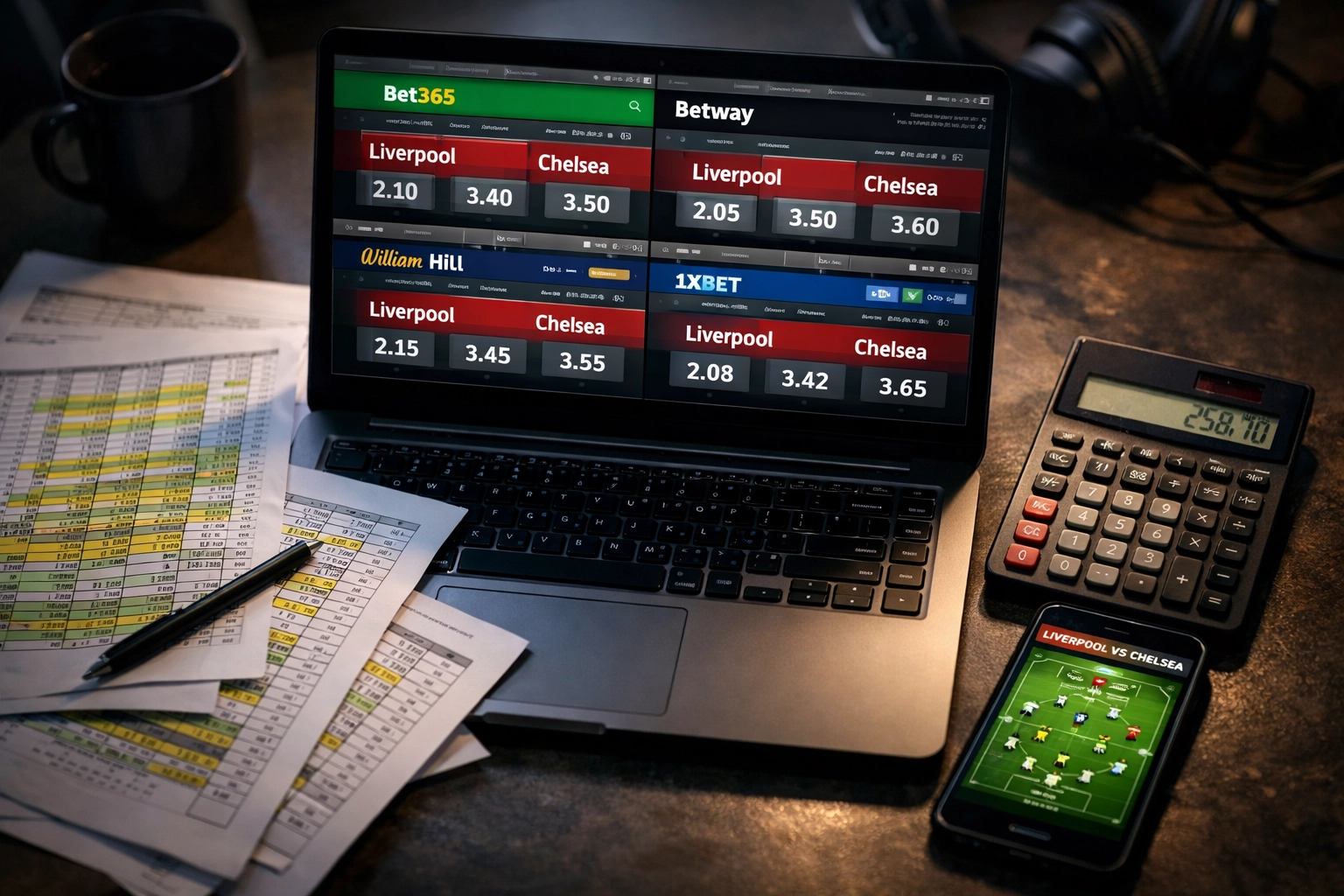
Price shopping isn't optional: it's fundamental. Different bookmakers price matches differently, and those discrepancies represent immediate value. Consider this real example: one bookmaker offered 1.28 on a heavy favorite while another had 1.36 on the same outcome. That 8-cent difference might seem trivial, but on short-priced favorites across multiple bets, it compounds significantly.
Betting exchanges add another layer of comparison. Exchange prices often reflect truer market sentiment than traditional bookmaker odds, which include a larger margin. If you find traditional bookmaker odds that beat exchange prices (minus commission), you've likely found genuine value.
Timing Your Entries Strategically
A general principle worth considering: back favorites early and underdogs late. Why? Money typically flows toward favorites as kickoff approaches, which moves lines and reduces value on short prices. Conversely, underdogs often drift to better odds as favorites get backed down.
This isn't a universal rule: market-specific dynamics matter. But understanding how money moves helps you time entries for maximum value. Track how odds move in your chosen markets over time. You'll notice patterns that reveal when to strike.

Early team news can trigger significant market movements. If you've done your homework and know a key player's availability might swing a match, monitoring lineup announcements 60-90 minutes before kickoff can present opportunities as bookmakers adjust to new information.
Calculate Expected Value Before Placing
Even when you've identified favorable odds, calculate whether the positive edge justifies the wager. Expected value (EV) is calculated by multiplying each possible outcome by its probability, then summing the results.
For example: if you bet €100 at odds of 2.50 on an outcome you assess has a 50% probability:
- Win scenario: €150 profit × 0.50 = €75
- Loss scenario: -€100 × 0.50 = -€50
- Expected value: €75 – €50 = €25
A +€25 EV on a €100 bet is strong. But marginal edges: say, +€3 EV on that same €100 stake: might not be worth placing, especially when factoring in variance and opportunity cost.
Tools and Resources for Sharp Analysis
Modern value hunting requires the right tools. Odds comparison sites let you scan multiple bookmakers instantly. Statistical databases provide the raw data for probability modeling. Some advanced bettors use predictive models or follow closing line value (CLV) to validate their approach.
Closing line value is particularly instructive: if your bets consistently beat the closing odds (the sharpest, most efficient price), you're demonstrating genuine skill at finding value. Track this metric religiously: it's the most honest assessment of your betting acumen.

Early morning football news aggregators help you stay ahead of team news and lineup leaks. Follow credible journalists who break stories before official announcements. These information edges, combined with pre-calculated scenarios for different lineup combinations, let you react quickly when news breaks.
Common Mistakes That Destroy Value
Results-Oriented Thinking
The biggest trap is judging individual bets by their outcomes rather than the quality of the decision. A value bet that loses was still the right play if your analysis was sound and the edge was real. Conversely, a lucky winner on a terrible bet doesn't validate poor process.
Value betting operates over hundreds or thousands of wagers, not single outcomes. Maintain proper bankroll management and embrace variance as part of the edge. If you can't handle inevitable losing streaks without questioning your system, you'll abandon winning strategies at precisely the wrong time.
Ignoring Market Efficiency
Not all markets are equally beatable. Major leagues with massive betting volumes are harder to find edges in than obscure competitions. But niche markets require different skills: you can't rely on sophisticated models when data is sparse or unreliable.
Choose your battles. Playing in markets where you have genuine information or analytical advantages gives you a sustainable edge. Betting everything because it's available is a recipe for losses.
Betting Without Sufficient Edge
Even positive EV bets need meaningful edges to overcome variance and the friction of losing streaks. A 1-2% edge might be theoretically profitable but practically unworkable due to variance. Aim for situations where your edge is clear and substantial: 5% or higher when possible.
Making Early Morning Analysis Part of Your Routine
Successful value hunting requires consistency. Develop a morning routine that covers injury news, lineup speculation, early odds movements, and statistical review. The bettors who profit long-term treat this like a job, not a hobby.
Document your bets and reasoning. Review regularly to identify what's working and where your analysis fails. This feedback loop transforms good instincts into systematic advantages.
The early morning market won't hand you winners. But for those willing to do the analytical work while others sleep, it offers something more valuable: consistent edges that compound over time. Start each day by asking not "Who will win?" but "Where has the market mispriced probability?": and you'll be thinking like a profitable bettor.